SINUS LIFT – your path to a perfect smile and long-lasting dental implants
If you dream of having a confident smile again but have lost teeth in your upper jaw, you’ve probably heard that dental implants are the most reliable and long-term solution.
However, what many people don’t realize is that before implants can be placed, there is sometimes an essential and completely safe preparatory procedure called a sinus lift.
In this article, you’ll learn what a sinus lift is, how the procedure works, what to expect during recovery, and—most importantly—why our clinic is the perfect place to have it done.
What is a sinus lift?
A sinus lift (also known as sinus augmentation) is a minor surgical procedure that adds bone to the upper jaw in the area of the back teeth (usually molars and premolars).
The goal is to increase bone height and create a strong foundation for dental implants.
Why is sinus lift necessary?
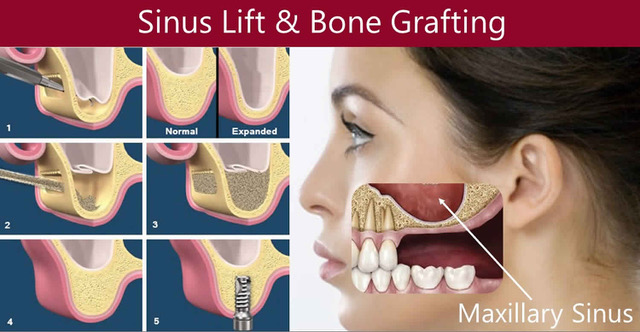
Above your upper teeth are maxillary sinuses—air-filled spaces lined with soft tissue. When teeth are lost, the bone that used to support them begins to resorb and shrink, while the sinus cavity expands downward.
The result? There isn’t enough bone left to securely hold an implant.
A sinus lift gently raises the floor of the sinus and places bone graft material underneath. Sometimes we don`t place the bone graft but make the environment for bone to create in it. Over time, this graft naturally fuses with your existing bone, creating a stable base for implant placement that can last a lifetime.
How the sinus lift procedure works?
The procedure is done under local anesthesia (completely pain-free) and usually takes between hour and two.
Here’s what you can expect:
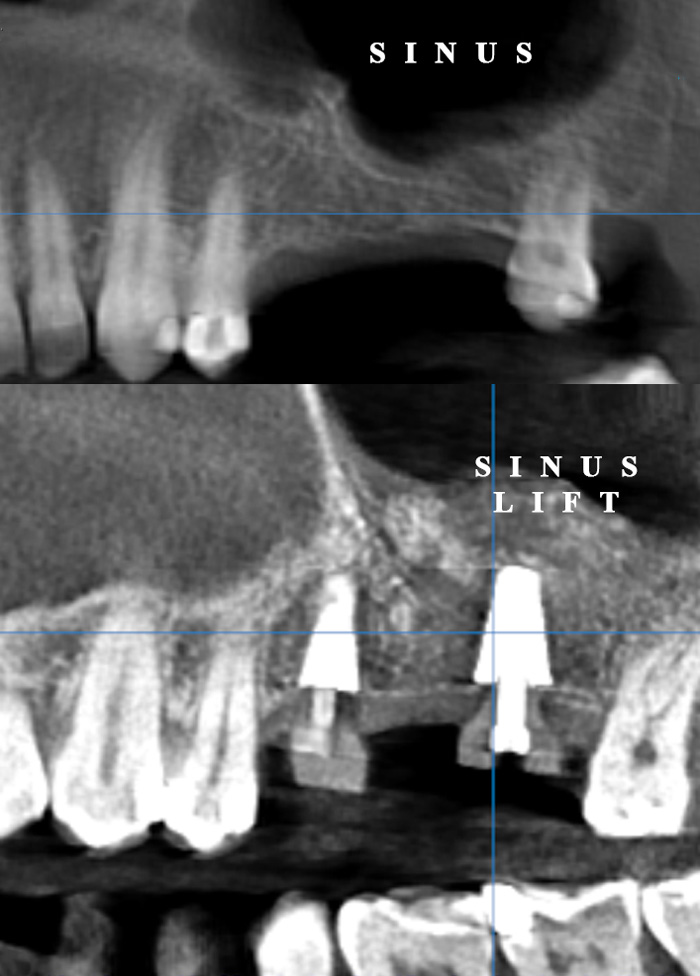
- Comprehensive 3D diagnostics – Everything begins with a CBCT scan that gives our team a precise 3D image of your bone, sinuses, and surrounding structures.
- Treatment planning – Our oral surgeon evaluates how much bone is needed and carefully plans the best approach.
- Accessing the sinus – A small opening is made in the gum and bone to reach the sinus floor.
- Lifting the sinus membrane – The thin membrane lining the sinus is gently lifted upward to create space.
- Bone graft placement – Bone material (natural or synthetic) is placed into the created space.
- Closing the site – The gum is stitched, and the patient goes home the same day.
Depending on how much bone is missing, your implant can sometimes be placed immediately during the sinus lift, or—more commonly—after 4 to 8 months, once the grafted bone has healed and solidified.
Does a sinus lift hurt?
Not at all!
Thanks to modern anesthetics and gentle surgical techniques, a sinus lift is a completely comfortable and painless experience.
After the procedure, you may feel mild pressure or swelling around your cheeks or nose for a few days, but this is temporary and easily managed with mild pain relievers.
Most patients return to normal activities within 24 hours.
Types of sinus lift procedures
There are two main types of sinus lifts:
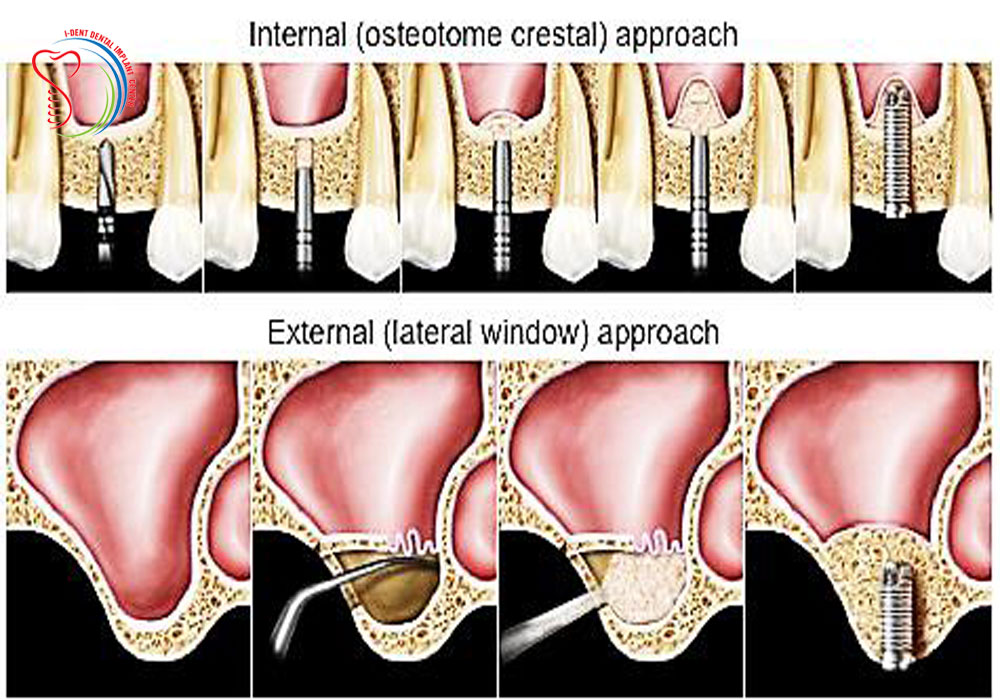
- Open (lateral) sinus lift – used when a significant amount of bone needs to be added; performed through a small lateral window in the bon Through this window, with special curettes, the sinus mucosa is separated from the bone walls. This is a delicate part because the mucous membrane is thin and should not be torn, so it must be done carefully. The procedure resembles (and this is how some authors describe it) separating the membrane of a raw egg from its shell. By separating the mucous membrane from the bony wall, an empty space is formed in which natural, artificial bone or a combination of both is placed. Then we close the opening window and return the mucous membrane to its place, suture and thus the intervention ends.
- Closed (internal or transalveolar ) sinus lift – used when only a few millimeters of bone height are needed; done through the implant site itself.
Transalveolar sinus lift is a procedure that is performed in the same intervention as implant placement. It can be performed when the sinus bone floor needs to be raised by about 2 to 4 mm.
Transalveolar sinus lift is performed under local anesthesia or sedation. After preparing the implant site, special instruments are used to break the sinus bone floor and, under light pressure, push the sinus membrane away from socket.
Why choose our Queen clinic for your sinus lift?
When it comes to oral surgery, experience and precision matter most.
Our clinic brings together a team of highly skilled oral surgeons and implantologists with years of experience and hundreds of successful sinus lift procedures behind them.
We mostly use native bone and PRF (Platelet-Rich Fibrin) technology, derived from your own blood, to accelerate healing and improve bone regeneration.
Here’s why patients choose us:
✅ Pain-free and comfortable procedure
✅ Advanced digital diagnostics and 3D treatment planning
✅ Biocompatible, world-class materials
✅ Friendly, caring team dedicated to your comfort
✅ Proven results and long-term success
For our team, a sinus lift isn’t a “big operation” — it’s a routine, safe, and essential step toward a healthy, confident smile.
Trustindex verifies that the original source of the review is Google. My experience with this dental clinic, especially with the Invisalign treatment, has been absolutely wonderful. Today, I have a beautiful smile thanks to their professional and dedicated work. The entire process was pleasant, clear, and completely transparent. Dr. Isidora did an outstanding job, and I wholeheartedly recommend her.Trustindex verifies that the original source of the review is Google. Вы лучшие! Спасибо огромное коллективу стоматологии Queen за изумительное отношение к пациентам и великолепное качество работы!Trustindex verifies that the original source of the review is Google. I had an amazing experience at Queen Dental Clinic. Dr. Miloš and the entire team were very professional and kind. I came with pain in my previously root canal treated tooth, and they quickly found the problem, explained everything clearly, and treated it perfectly. The clinic is super clean, modern, and everyone speaks excellent English, which made me feel very comfortable. My tooth feels completely fine now! Highly recommend this clinic to anyone looking for quality dental care in Belgrade. 💯🦷Trustindex verifies that the original source of the review is Google. Imala sam strah od zubara, ali u ovoj ordinaciji taj strah je potpuno nestao. Već pri prvom dolasku dočekala me je topla i prijatna atmosfera a njihov pažljiv i nežan pristup ulio mi je ogromno poverenje. Toliko sam se opustila da sam jednom čak i zaspala na stolici tokom rada🙂 Danas odlazim bez trunke nervoze jer znam da sam u sigurnim i stručnim rukama. Profesionalni, ljubazni i posvećeni. Toplo preporučujem svima koji žele kvalitetnu i bezbolnu stomatološku negu. Posebnu zahvalnost dugujem dr Mireli i dr Milošu, za njihov osmeh, strpljenje, profesionalnost i toplinu kojom svaki dolazak pretvaraju u najprijatnije iskustvo.Trustindex verifies that the original source of the review is Google. Pacijent sam ove ordinacije već više od 10 godina i uvek sam izlazio zadovoljan. Radio sam sve od čišćenja kamenca do zahtevnijih intervencija i uvek je sve urađeno bezbolno, temeljno i uz objašnjenje svakog koraka. Dr Mirela i ostatak ekipe su pažljivi, stručni i posvećeni, a atmosfera u ordinaciji je prijatna i opuštajuća. Zaista pružaju osećaj sigurnosti i poverenja. Preporučujem svima koji žele kvalitetnu i profesionalnu stomatološku negu.Trustindex verifies that the original source of the review is Google. The dentists in Queen Dental Clinic are highly skilled, take the time to explain procedures clearly, and always make me feel comfortable and well taken care of. The quality of care is excellent, and I fully trust their expertise and would highly recommend them to anyone looking for a reliable and professional dentist.Trustindex verifies that the original source of the review is Google. Kao i pre 7 godina, sa zadovoljstvom konstatujem da u ordinaciji radi isti tim doktora koji me je i tada kupio i obezbedio sve preporuke svojom strucnoscu, ljubaznoscu, razumevanjem i posvecenoscu resenju problema pacijenta. Sve pohvale timu na celu sa dr Mirelom, a posebna zahvalnost dr Milosu na pristupu koji je smrvio moj kukavicluk.Google rating score: 4.9 of 5, based on 133 reviews
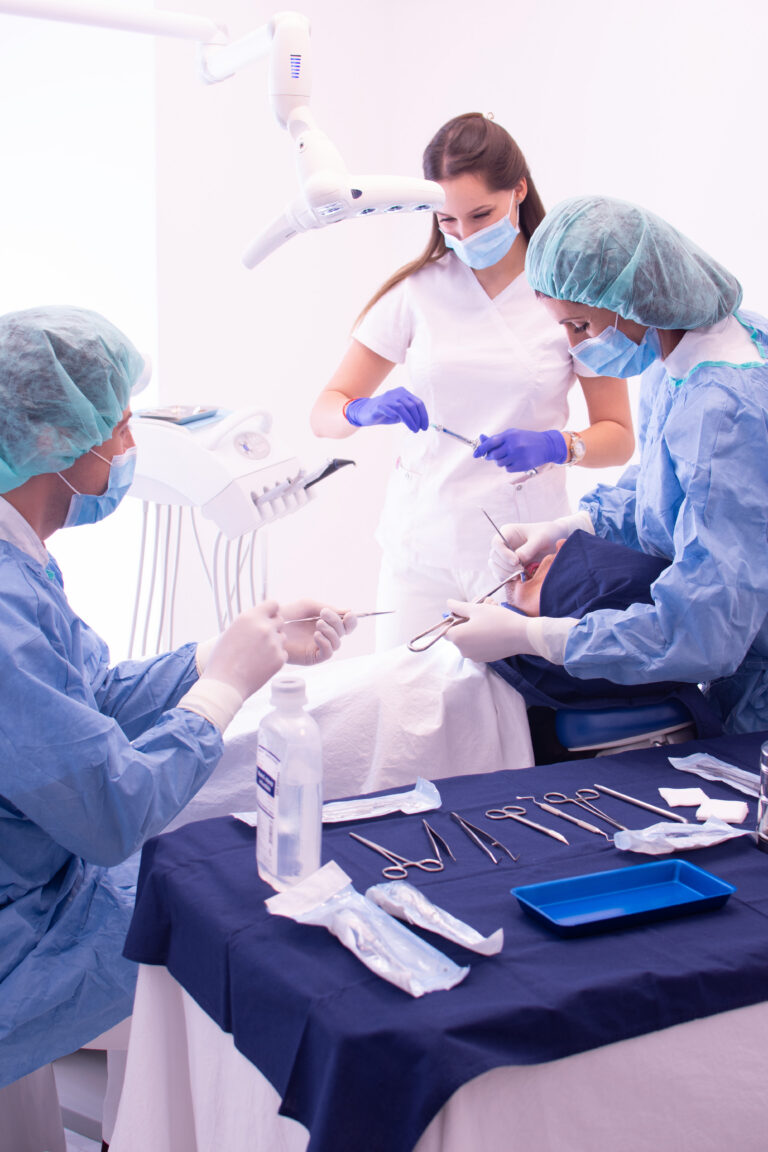
Recovery after a sinus lift
Recovery is usually smooth and uneventful.In the first few days, you’ll be advised to avoid strenuous physical activity, blowing your nose, or bending over too much — simply to protect the healing site.
Most swelling disappears within 3–5 days.
You’ll return for a check-up after one week, and stitches are usually removed after 10–14 days.
The grafted bone will mature and fully integrate within several months, after which your jaw will be ready for implant placement.
Your new smile is closer than you think!
Common Questions from Patients
What is sinus?
The maxillary sinus is a cavity in the bone of the upper jaw that is closely related to the roots of the upper lateral teeth. The size of the sinuses and the degree of filling with air is variable. Thus, we distinguish between large and pneumatized sinuses that extend to the canines and less pneumatized ones located in the region above the six and seven teeth. The bony walls of the maxillary sinus are lined with a thin mucous membrane.
Why does it have to be lift?
Basically, it does not have to be raised if you do not plan to install an implant in that region. But if you plan to have dental implant and there is no enough of bone for it, a sinus lift is one way that makes implantation possible. As a type of bone augmentation, it is routinely used in practice and enables the subsequent installation of implants in that region.
What is going on with sinus after tooth extraction?
After the extraction of the upper lateral teeth, there is a gradual expansion of the sinus and resorption and disappearance of the bone of the alveolar ridge (the area where the teeth stood). In this way, the jawbone in the upper lateral regions decreases quite rapidly in all directions. If an implant is not placed long after tooth extraction, the bone in this area continues to disappear. In the end, there is not enough for implant placement. There may be a lack of bone height, width, or a combination of both
How long does the sinus lift take?
Typically between one and two hours, depending on the case.
Is the sinus lift safe?
Yes, absolutely. When performed by an experienced surgeon in sterile conditions, complications are extremely rare.
What kind of bone is used for the graft?
We can use synthetic or your own bone (autograft). All materials we use are 100% biocompatible, safe, and certified.
Can I get an implant right after the sinus lift?
In some cases, yes. We will determine if your bone volume allows for immediate implant placement.
When the first sinus lift was performed?
For the first time, the sinus lift was performed in 1960, but at that time for other reasons. For the purposes of installing implants, the sinus lift was performed for the first time in 1977. Today, it is a standard procedure, which, compared to other bone augmentation procedures, has the highest degree of success.
What is the minimum amount of bone sufficient to install an implant and avoid a sinus lift?
It is usually about 10mm of bone height.
Who cannot have a sinus lift?
People who suffer from certain diseases related to general health, but also diseases that affect the sinus itself:
– there must be no acute infection in the sinus, minimal chronic infections of the mucous membrane of the sinus are allowed;
– the sinus lift procedure is significantly influenced by the morphology of the sinus itself. Thus, sinuses that have bony partitions are not favorable for a sinus lift because they can easily cause complications;
– Sinus lift should be avoided in case of bony or soft tissue tumors of the sinuses, fungal diseases of the sinuses, frequent and intense allergic rhinitis.